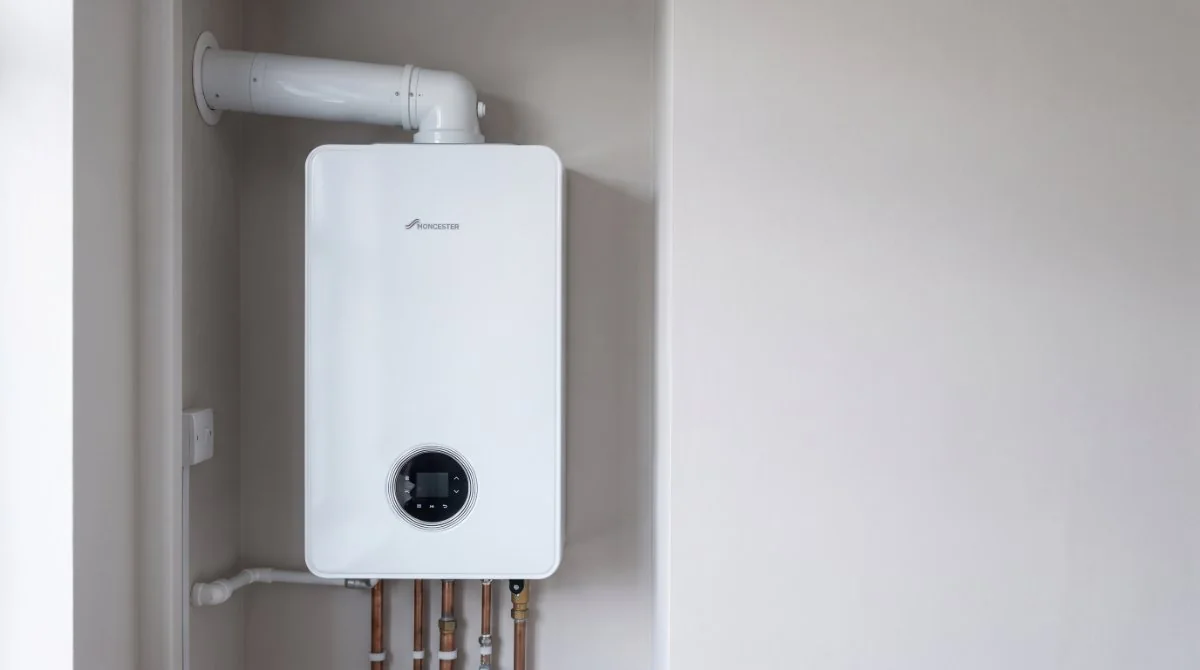
- If a gas main runs past your property, gas is usually the simpler option.
- Oil is not a worse fuel — it is the standard choice for most homes off the gas grid.
- Oil needs storage; gas does not. That single fact drives most of the practical differences.
- Switching fuel is a bigger job than replacing a boiler, and needs both OFTEC and Gas Safe registration.
Most people never actually choose between oil and gas. The choice was made when the house was built, by whether a gas main happened to run past the end of the road. If it did, the house is almost certainly on gas. If it did not, it is probably on oil, LPG or something electric.
That said, the question comes up often enough — usually when a boiler is at the end of its life and someone is deciding whether to replace like for like or do something different. So it is worth understanding what genuinely separates the two.
The practical difference is storage
Gas arrives continuously through a main. You never think about supply, you never order anything, and there is nothing in the garden. Oil arrives by tanker and sits in a tank until you burn it, which means you have to have somewhere to put the tank, you have to order deliveries, and you have to keep an eye on the level.
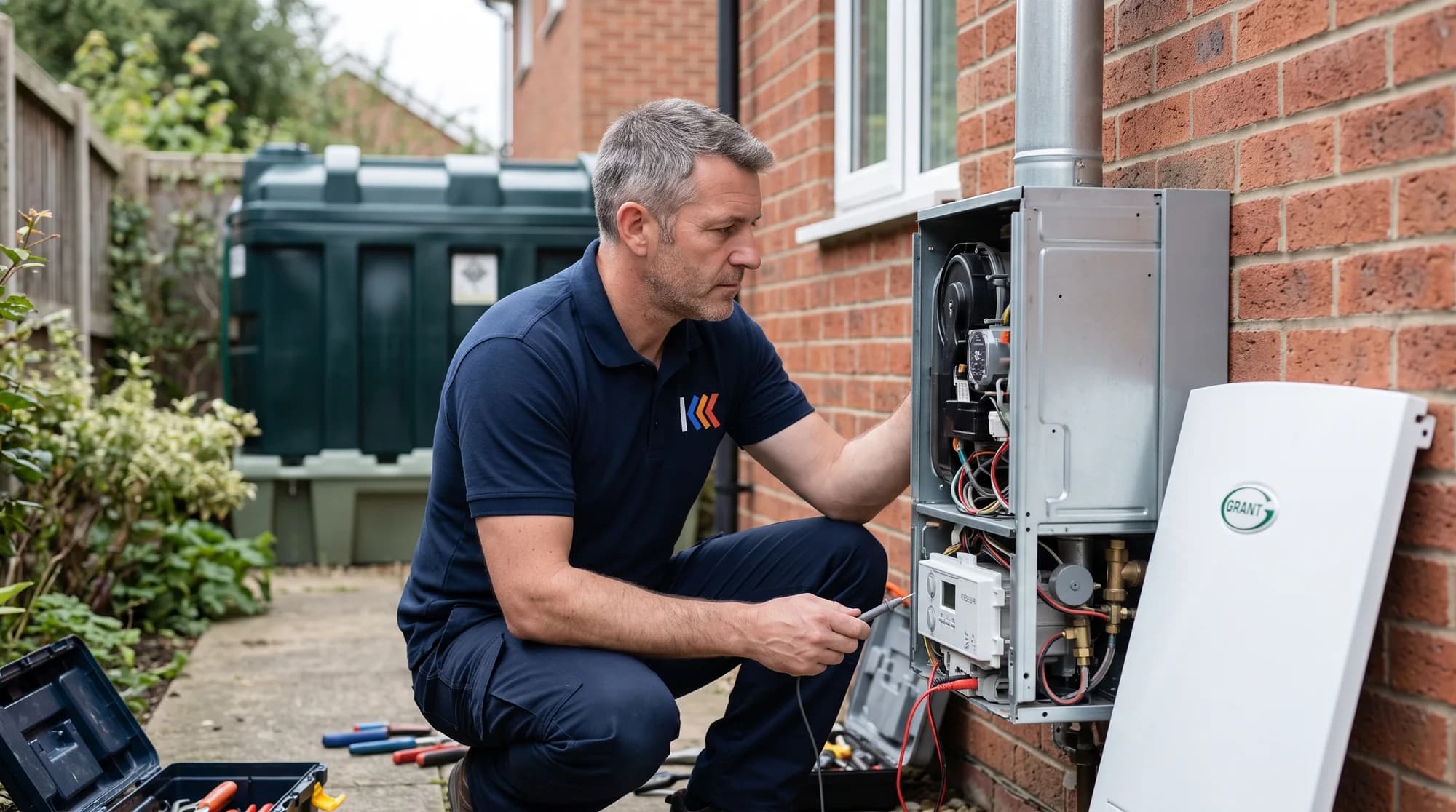
Nearly every other practical difference follows from that one. Oil systems have a tank, a supply line running from the tank to the boiler, and a filter somewhere in between — three things a gas system simply does not have, and three more things that can eventually need attention.
What each one needs from an engineer
Both need an annual service, and both are regulated — but by different schemes, which is where households often get caught out.
Gas and LPG work is covered by the Gas Safe Register. It is a legal requirement: an engineer who is not on the register cannot lawfully work on your gas appliances. Oil work is covered by OFTEC registration, which is the recognised scheme for oil-fired appliances and the tanks and pipework that feed them.
The two are separate qualifications. A firm holding one does not automatically hold the other, which is why a household with an oil boiler and an LPG hob can end up calling two companies for what feels like one job.
Running costs are not the whole picture
Fuel prices move, and oil moves more visibly than gas because you buy it in large amounts at a time rather than paying monthly. That makes oil feel more volatile even in years when the annual cost works out similar.
The more useful comparison is total cost including the system itself. Oil systems have the tank to maintain and eventually replace. Gas systems do not, but connecting a property that has never had gas is a significant piece of work in its own right.
We are not going to publish numbers here, because they date quickly and every property is different. If you want a genuine comparison for your house, that is a conversation worth having with the actual figures for your usage in front of you.
If you are thinking about switching
Converting from oil to gas is not a boiler swap. It means a new supply from the main, a new appliance, changes to the flue, and decommissioning and usually removing the oil tank and its pipework. Because it touches both fuels, it needs both registrations — which is the exact situation that makes people ring round three firms.
It is worth doing properly if the gas main is genuinely available at your boundary. It is rarely worth doing if it is not, and no amount of dissatisfaction with oil prices changes the cost of bringing a main several hundred metres up a lane.
- Check whether a gas main actually runs to your boundary before anything else
- Establish what removing or decommissioning the existing tank involves
- Factor in flue changes, not just the appliance
- Make sure whoever quotes holds both OFTEC and Gas Safe registration
What about LPG?
LPG sits between the two. It burns like gas and the appliances are similar, but it is stored in a bulk tank or cylinders like oil, so you are back to ordering deliveries. It is common in properties off the gas grid where oil was never installed.
LPG work sits under Gas Safe registration rather than OFTEC, which surprises people who assume anything with a tank in the garden counts as oil.
General guidance based on work we do regularly. Every property is different — if something here sounds like your situation, it is worth having it looked at rather than diagnosed from a page.