Electrical
Safe, code-compliant electrical work for your home — from a single faulty socket to a full rewire.
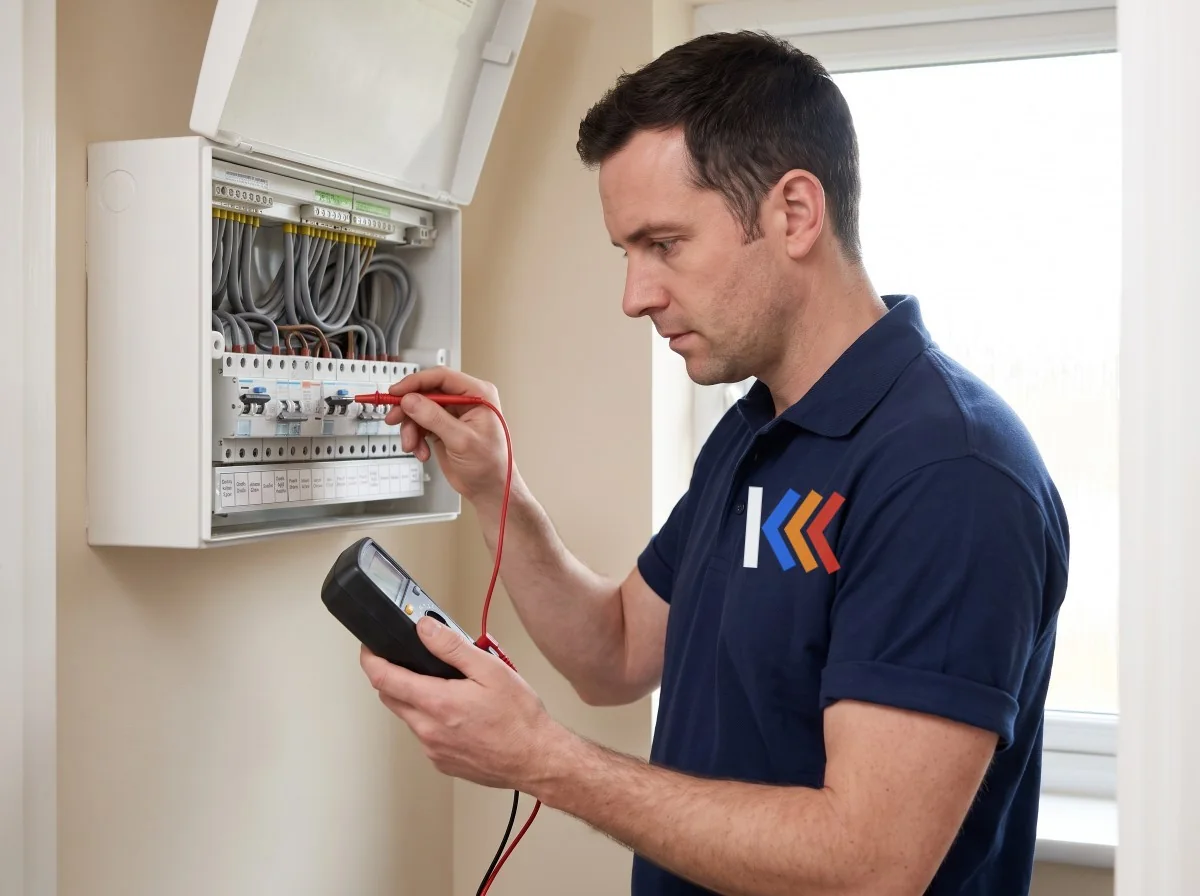
Electrical faults are the ones homeowners most often live with. A socket that has stopped working, a circuit that trips every so often, a light that flickers when the shower runs — none of it stops the house functioning, so it gets left.
It is worth not leaving it. A breaker that trips intermittently is reporting a real fault, and the value of proper fault finding is that it identifies which one rather than replacing components until the symptom goes away.
Signs worth acting on
A breaker that keeps tripping
Repeated tripping is a fault being detected, not a nuisance. Resetting it repeatedly without finding the cause is the thing to avoid.
An old fuse board
Rewireable fuses and boards without RCD protection predate current expectations for shock and fire protection. A consumer unit upgrade is the usual remedy.
Warm sockets or scorch marks
Heat at an accessory points to a loose connection or an overloaded circuit. Stop using it and have it looked at rather than waiting.
Lights dimming under load
Noticeable dimming when a large appliance starts can indicate a supply or connection problem worth investigating properly.
How the job runs
Describe the fault
What trips, when it trips and what is running at the time narrows the circuit down quickly.
Test methodically
Faults are traced by testing the installation, not by swapping accessories and hoping.
Explain what we found
You get told what the actual fault was and what fixing it involves, in plain terms.
Leave it compliant
Work is completed to current wiring regulations, with any remedial items flagged rather than buried.
Electrical across the region
Berkshire, Hampshire, Oxfordshire and Surrey, plus the London Borough of Richmond upon Thames and Bournemouth. Not sure if you are in range? Call and ask — it is usually a yes.
Common questions
If it still uses rewireable fuses or has no RCD protection, an upgrade is usually worth doing. Modern consumer units add protection against both electric shock and some causes of electrical fire that older boards simply do not provide.
There is usually a reason, and it is usually a small leakage fault somewhere on the circuit — often a damp exterior socket, an ageing appliance or a nail through a cable. Proper testing identifies which, rather than leaving you to guess by unplugging things.
A full rewire involves lifting floors and chasing walls, so it is most easily done when a property is empty or during other building work. Partial rewires and circuit-by-circuit upgrades are often a more practical option in an occupied house.
Yes — faulty appliance checks are part of what we cover, and they are often the quickest way to settle whether a tripping circuit is the installation or something plugged into it.
Our electrical certification is being confirmed and this page will be updated with the scheme and registration number once it is. Our heating and plumbing work is already covered by OFTEC, Gas Safe and G3 registration, and we would rather state the electrical position plainly than imply something we have not yet published.
Related services
All services →Need an electrician?
Describe the problem and we will tell you straight — then quote for it.