- Repeatedly resetting without finding the cause is the thing to avoid.
- An MCB tripping and an RCD tripping mean different things.
- Most RCD trips come from one appliance or one damp circuit, and can be narrowed down methodically.
- A breaker that will not reset at all should be left alone until it is tested.
The instinct when something trips is to walk to the consumer unit and flip it back. That is fine once. When it becomes a weekly ritual, the breaker is telling you something and the resetting is stopping you from hearing it.
The good news is that these faults are usually traceable, and often turn out to be one specific appliance or one specific damp spot rather than anything structural.
First, work out what tripped
The device that operated tells you a great deal about the kind of fault, and the two common types report very different things.
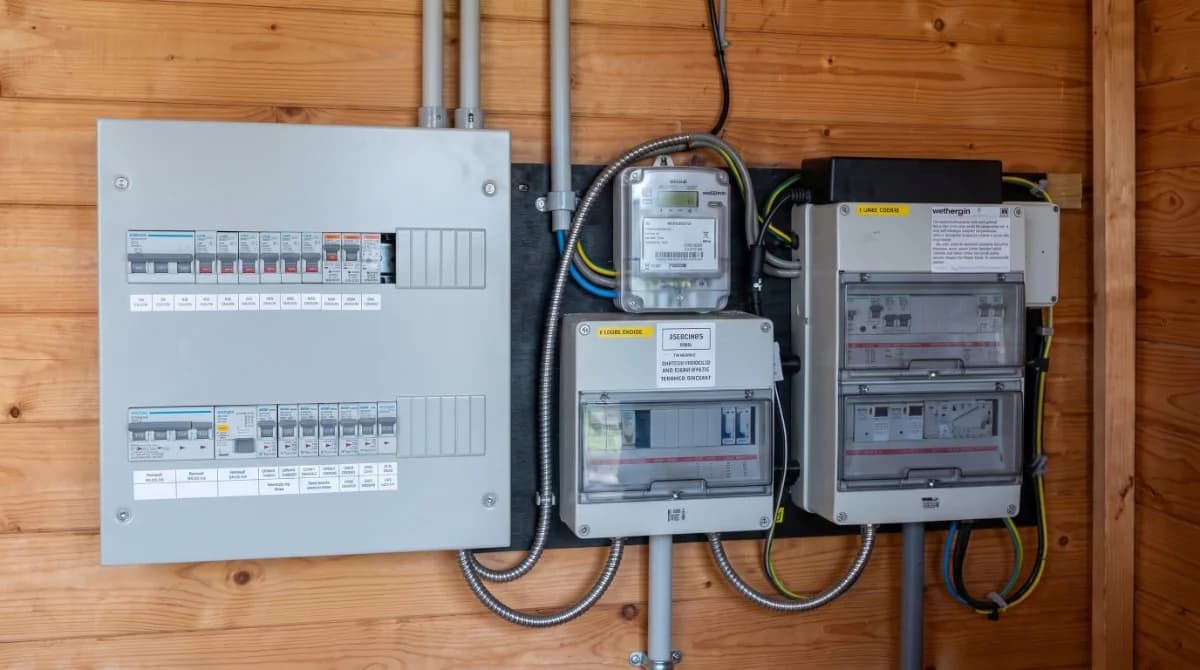
An MCB — a single breaker protecting one circuit — trips on overload or short circuit. Too much current, usually because too much is plugged in or because live and neutral have made contact somewhere.
An RCD trips when current is leaking to earth. That is the device protecting people rather than cabling, and it is doing so because electricity is finding a path it should not have. If your board has RCBOs, each one does both jobs for its own circuit, which makes the fault much easier to localise.
Narrowing down an RCD trip
Nuisance tripping is rarely a nuisance. It is usually one appliance with a deteriorating element, or moisture somewhere it should not be.
- Unplug everything on the affected circuits, reset, then reintroduce items one at a time
- Pay particular attention to anything with a heating element — kettles, washing machines, immersion heaters, tumble dryers
- Check outdoor sockets, garden lighting and anything in a garage or shed, especially after heavy rain
- Note whether trips correlate with weather, or with a particular appliance cycle
The pattern is the diagnosis
When you do call someone out, what you have noticed is genuinely useful. A fault that only appears when it rains points outside. One that appears when the washing machine reaches its heating stage points at the machine. One that trips at the same time every day points at a timer or an immersion heater.
Intermittent faults are the hardest to catch on a single visit, so anything that narrows down when it happens saves time.
When to stop and call someone
Some symptoms are not worth investigating yourself, and a couple mean stopping immediately.
- A breaker that will not reset at all — leave it off and have it tested
- Any burning smell, scorch marks or discolouration at a socket or the board
- A socket or plug that is warm to the touch
- Buzzing or crackling from the consumer unit
- Trips accompanied by lights dimming noticeably across the house
What an older board changes
If your board still uses rewireable fuses, or has no RCD protection at all, then the protection you are relying on is a generation behind current expectations. Older installations were never designed around the level of shock and fire protection that modern consumer units provide.
That does not make an old board an emergency. It does mean that recurring faults on one are worth investigating properly rather than living with, and that an upgrade is often the sensible outcome.
General guidance based on work we do regularly. Every property is different — if something here sounds like your situation, it is worth having it looked at rather than diagnosed from a page.